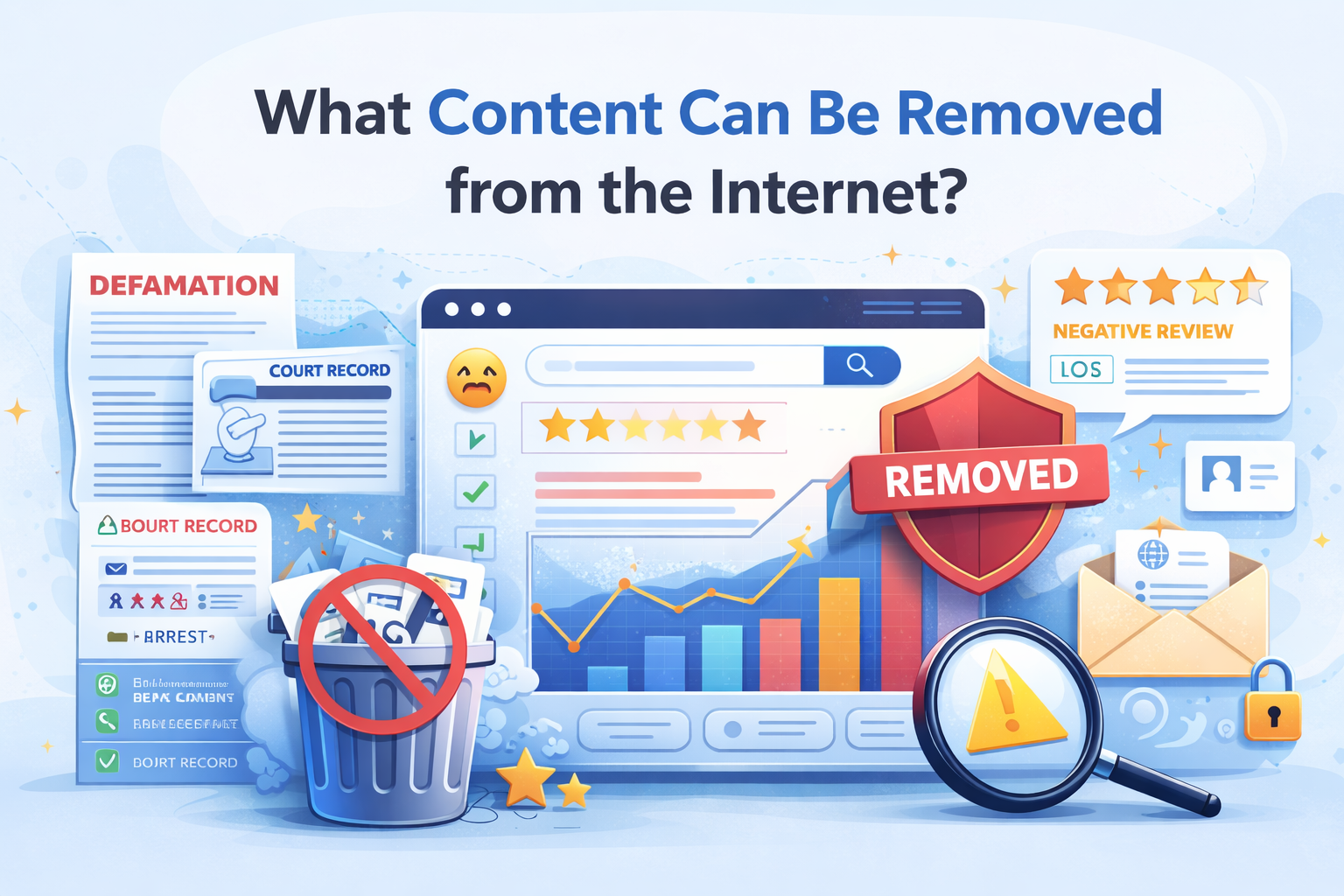
What Content Can Be Removed from the Internet? (Complete Guide)
In today’s digital world, your online reputation can significantly impact your personal life, career, and business. A single negative article, outdated court record, or defamatory post can appear in search results and harm your credibility.
Many people wonder: What content can actually be removed from the internet?
While not everything online can be deleted, many types of harmful or outdated content can be removed, suppressed, or de-indexed using professional Online Reputation Management (ORM) strategies.
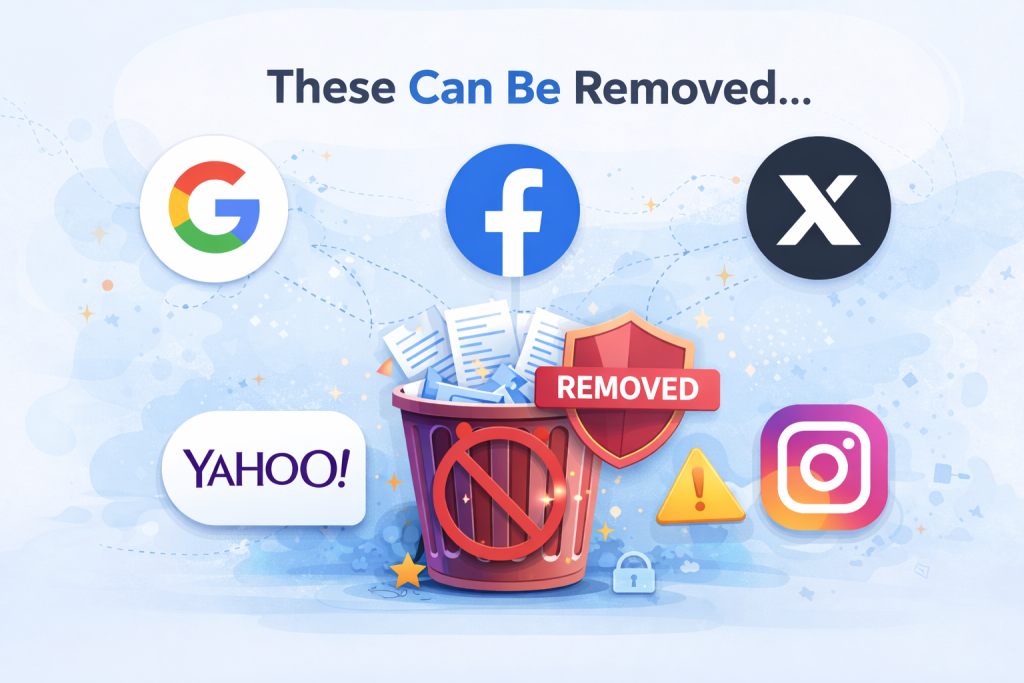
This guide explains the types of content that can be removed from Google and the internet and how reputation management services help restore your online image.
Why Removing Negative Content Matters
When someone searches your name or business on Google, the results they see create the first impression.
Negative search results can lead to:
Loss of customers or clients
Damage to personal reputation
Career limitations
Legal complications
Decreased brand trust
This is why individuals, executives, and companies rely on online reputation management services to monitor and remove harmful content.
Types of Content That Can Be Removed from the Internet
Below are the most common types of content that reputation management experts can help remove or suppress.
1. Negative News Articles
Online news websites sometimes publish articles that contain:
Outdated information
Misleading details
Reputation-damaging headlines
Even if the situation has changed, the article may still appear on the first page of search results.
Reputation experts can:
Request article removal
Submit legal removal requests
Suppress articles with positive SEO content
2. Defamatory or False Content
Defamation includes false statements posted online that harm a person’s reputation.
Examples include:
False accusations
Fake allegations
Misleading blog posts
Fake complaints
Such content may appear on:
Blogs
Forums
News websites
Social media platforms
Professional ORM teams work to identify, report, and remove defamatory content through legal and technical channels.
3. Negative Search Results on Google
Sometimes the problem is not the content itself but how prominently it appears on search engines.
For example:
Negative blog posts ranking on page one
Complaint websites appearing in top results
Forum discussions damaging your reputation
ORM services help push down negative search results by promoting positive and authoritative content.
4. Court Records and Legal Information
Public court records can sometimes appear in search results and affect your reputation.
These may include:
Divorce cases
Civil disputes
Arrest records
Legal complaints
In many situations, professionals can request removal, suppression, or de-indexing of these results depending on jurisdiction and website policies.
5. Personal Information and Privacy Violations
Some websites may publish sensitive personal information such as:
Phone numbers
Home addresses
Email addresses
Personal documents
This type of information can be removed to protect privacy and security.
6. Negative Reviews and Complaints
Reviews play a major role in influencing consumer decisions.
However, some reviews may be:
Fake
Posted by competitors
Abusive or misleading
Reputation management experts can help report and remove fake or policy-violating reviews from platforms.
7. Harmful Social Media Content
Social media posts can spread quickly and damage a reputation.
Examples include:
Viral accusations
Harassment posts
False claims
Reputation attacks
ORM specialists monitor social platforms and request removal of harmful or violating content.
Content That May Not Be Fully Removed
It is important to understand that not all online content can be permanently deleted.
Some content may be:
Protected by freedom of speech
Published on highly authoritative platforms
Stored in archives
In such cases, ORM professionals use suppression strategies to ensure positive content ranks higher than negative results.
How Online Reputation Management Helps
Professional Online Reputation Management services use a combination of strategies:
Content Removal
Requesting websites or platforms to delete harmful content.
Legal Requests
Using legal frameworks to remove defamatory or violating content.
Search Result Suppression
Publishing positive content to push negative results down.
Continuous Monitoring
Tracking search results to detect reputation threats early.
Protect Your Online Reputation
Your digital reputation is one of your most valuable assets. Negative search results can impact trust, opportunities, and business growth.
With professional Online Reputation Management services, you can:
Remove harmful content
Improve search results
Build a positive online presence
Protect your personal or business reputation
If you want to take control of your online image, working with experienced reputation experts can make a significant difference.