
How Online Reputation Management Works: A Complete Guide
Introduction
In today’s digital world, your reputation is often formed before someone even meets you. A simple Google search can reveal reviews, news articles, social media posts, and other content that shapes public perception. This is where Online Reputation Management (ORM) (What content can be removed ?) becomes essential.
Online Reputation Management is the process of monitoring, improving, and protecting how a person or business appears online. Whether you’re a business owner, professional, or public figure, maintaining a positive digital presence is critical for building trust and credibility.
In this guide, we’ll explain how online reputation management works, the strategies used by experts, and why it plays a vital role in protecting your brand image.
What Is Online Reputation Management?
Online Reputation Management (ORM) refers to the practice of monitoring, influencing, and improving how your brand or personal name appears on the internet.
It focuses on managing content that appears on:
-
Google search results
-
Review websites
-
Social media platforms
-
News articles and blogs
-
Online forums and discussion sites
The goal of ORM is to ensure that positive and accurate information about you or your business is visible, while minimizing the impact of harmful or misleading content.
Why Online Reputation Management Is Important
Your online reputation directly impacts customer decisions and trust.
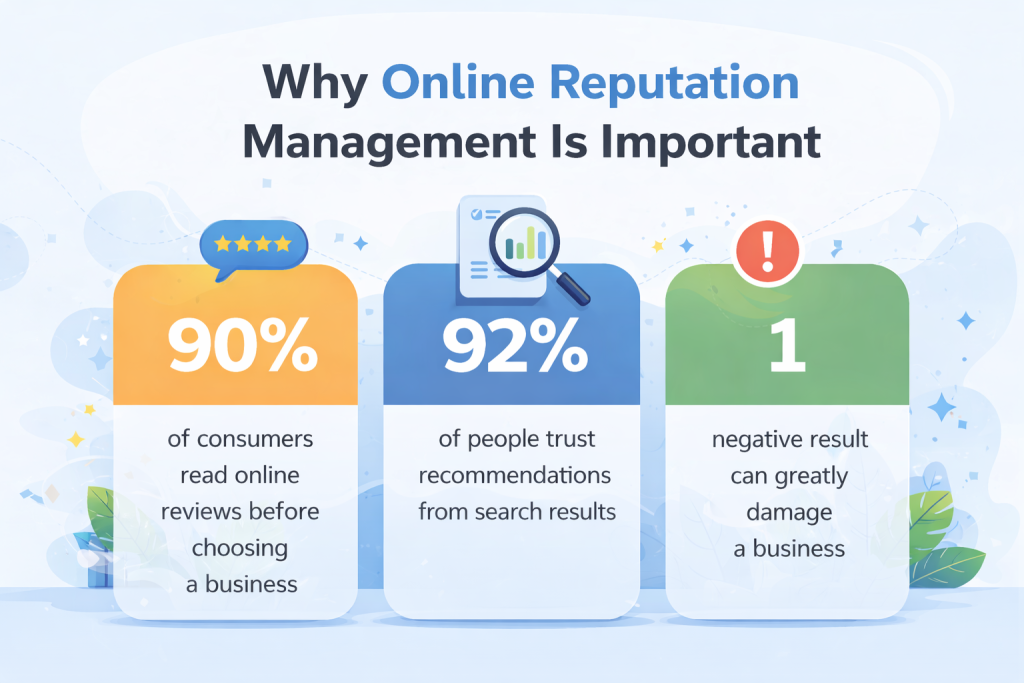
Research shows that over 90% of consumers read online reviews before choosing a business. Even a single negative search result can discourage potential customers.
Effective reputation management services help businesses and individuals:
-
Build trust with customers
-
Improve brand credibility
-
Increase sales and conversions
-
Protect personal and professional image
-
Control what people see when they search your name online
In competitive industries, reputation can be the deciding factor between gaining or losing customers.
How Online Reputation Management Works
Professional ORM services use a combination of monitoring, content creation, SEO strategies, and reputation repair techniques to improve online perception.
Below are the key steps involved in the process.
1. Reputation Analysis and Monitoring
The first step in reputation management is understanding the current situation.
Experts analyze:
-
Google search results for your name or business
-
Customer reviews across platforms
-
Social media mentions
-
News articles and blogs
-
Brand sentiment online
Advanced monitoring tools track new mentions in real time, allowing businesses to respond quickly to potential reputation issues.
2. Identifying Negative Content
After the analysis, the next step is identifying content that could harm your reputation.
This may include:
-
Negative reviews
-
False accusations or misleading information
-
Defamatory articles
-
Outdated or irrelevant content
-
Negative social media posts
Once the harmful content is identified, experts determine the most effective strategy to address it.
3. Content Removal or Resolution
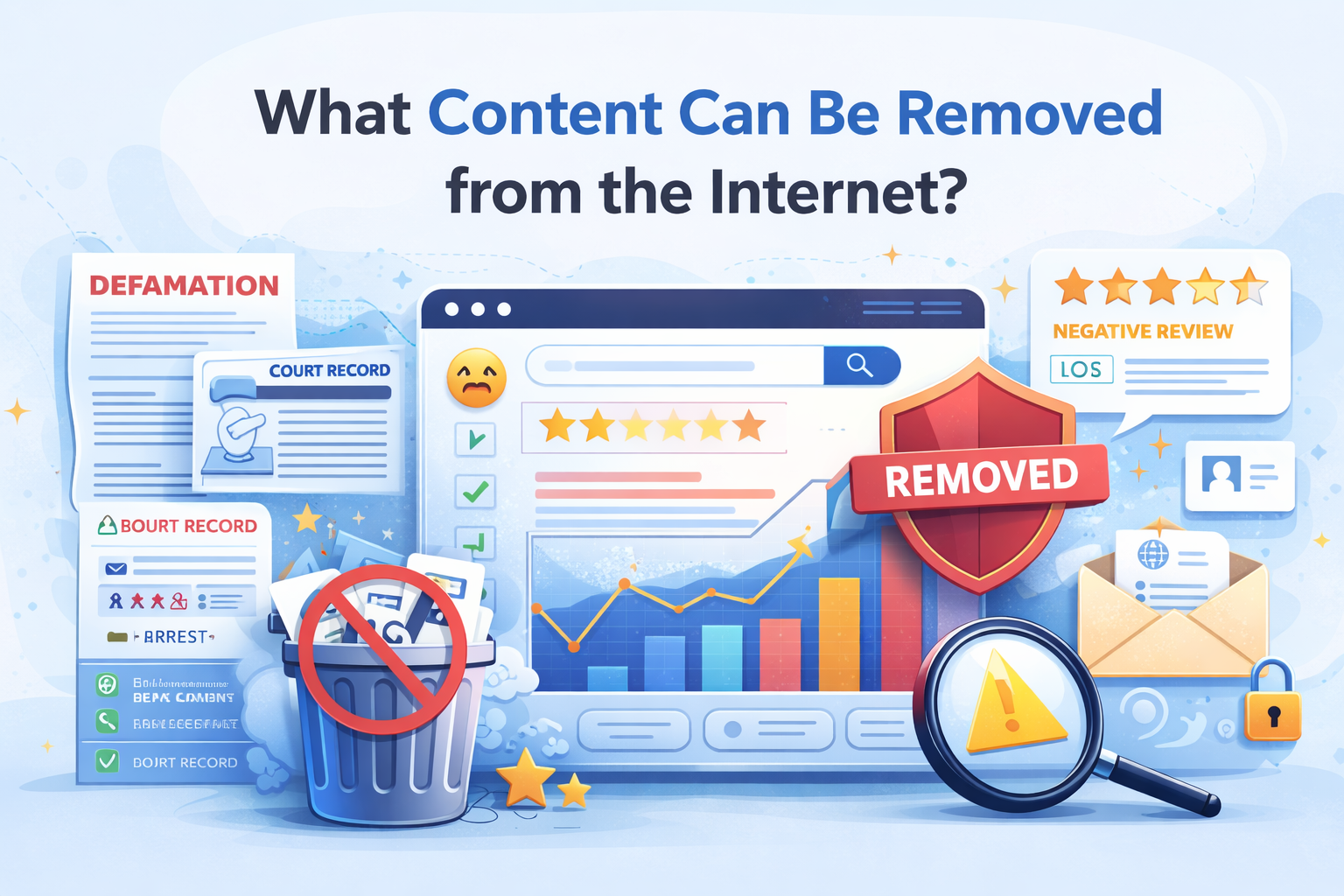
In some cases, harmful content can be removed by contacting website administrators, review platforms, or publishers.
Common approaches include:
-
Reporting policy-violating reviews
-
Requesting removal of defamatory content
-
Addressing customer complaints and resolving disputes
-
Legal requests when applicable
Although not all content can be removed, professional ORM strategies focus on reducing the visibility and impact of damaging information.
4. Search Result Suppression
One of the most effective ORM techniques is search result suppression.
This involves creating and promoting positive content that ranks higher on search engines, pushing negative results further down.
Search suppression strategies include:
Publishing optimized blog articles
Creating authoritative profiles
Building high-quality backlinks
Improving website SEO
Producing positive media coverage
Since most users rarely scroll past the first page of Google, moving negative results off the first page significantly reduces their visibility.
5. Positive Content Creation
Positive content plays a crucial role in shaping your online reputation.
ORM specialists develop content such as:
Blog posts and articles
Press releases
Company profiles
Interviews and thought leadership content
Social media updates
This content strengthens your digital presence and highlights the positive aspects of your brand or personal identity.
6. Review Management
Online reviews heavily influence customer decisions. Managing reviews effectively is a key part of reputation management.
Businesses should:
Encourage satisfied customers to leave positive reviews
Respond professionally to negative feedback
Address customer concerns promptly
Maintain transparency and authenticity
Proper review management strategies help maintain strong ratings and customer trust.
7. Continuous Monitoring and Maintenance
Online reputation management is not a one-time task. It requires ongoing monitoring and adjustments.
Continuous monitoring allows businesses to:
Detect reputation issues early
Respond to negative mentions quickly
Maintain a positive brand image
Track improvements over time
Long-term reputation protection ensures your online presence stays strong even as new content appears online.
Who Needs Online Reputation Management?
Online reputation management services are useful for many individuals and organizations, including:
Business owners and entrepreneurs
Doctors and healthcare professionals
Lawyers and legal professionals
CEOs and executives
Public figures and influencers
Startups and growing brands
Anyone whose reputation affects their professional success can benefit from a strong ORM strategy.
How Long Does Reputation Management Take?
The time required for reputation improvement depends on factors such as:
The severity of negative content
Competition in search results
The number of positive assets available
SEO difficulty for relevant keywords
Most reputation improvements begin to appear within 30 to 90 days, while more complex cases may require longer strategies.
Consistency and professional expertise are essential for achieving lasting results.
Best Practices for Maintaining a Positive Online Reputation
Here are a few key practices to maintain a strong digital reputation:
Monitor your name and brand regularly
Encourage positive customer feedback
Address complaints professionally
Maintain active social media profiles
Publish high-quality content regularly
Being proactive helps prevent small issues from becoming major reputation problems.
Conclusion
Your online reputation can influence opportunities, customer trust, and business growth. Understanding how online reputation management services works helps individuals and businesses protect their digital image effectively.
By combining monitoring, content strategies, SEO techniques, and review management, ORM professionals ensure that your online presence accurately reflects your value and credibility.
In an era where first impressions often happen online, investing in reputation management is one of the smartest decisions you can make for long-term success.